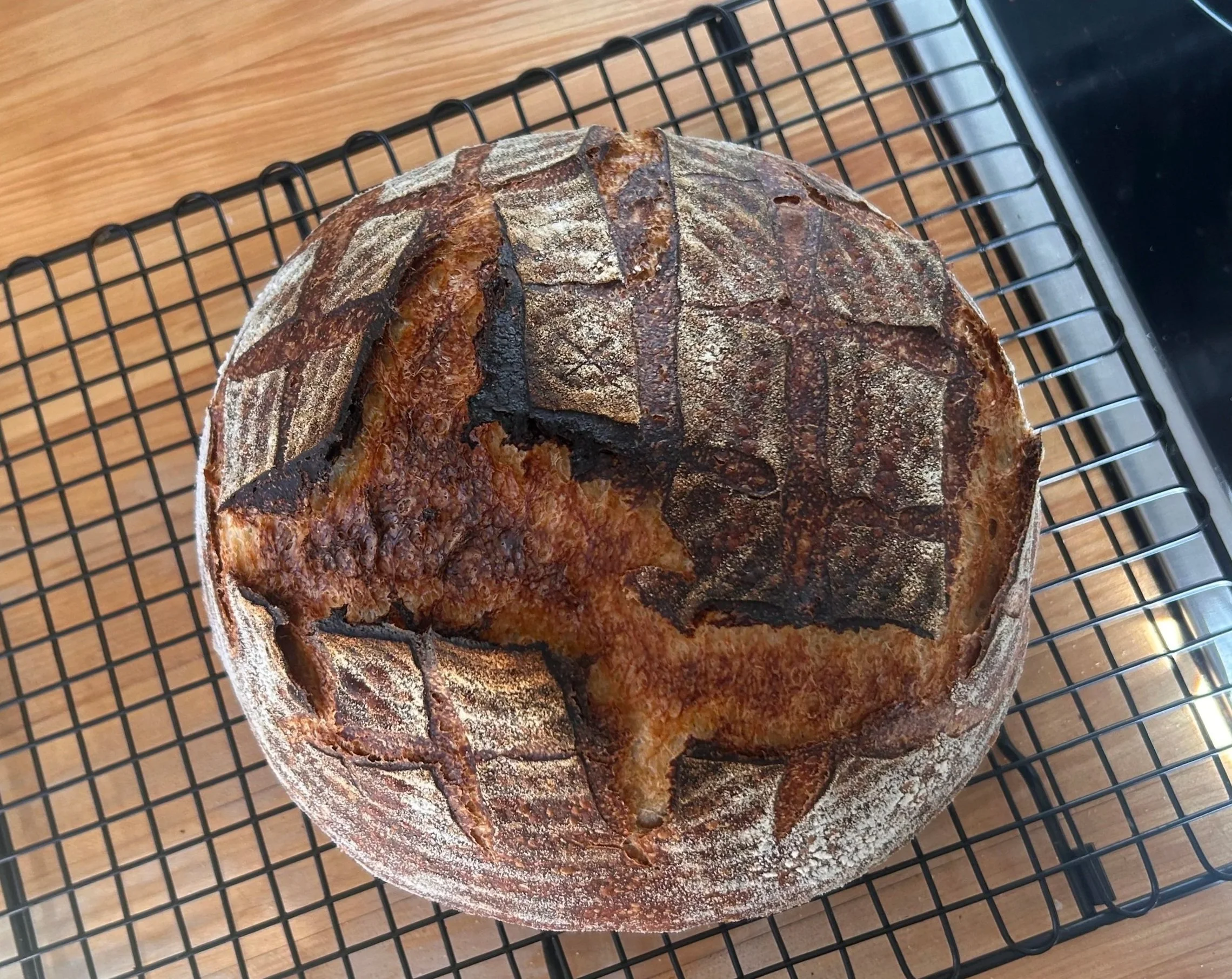
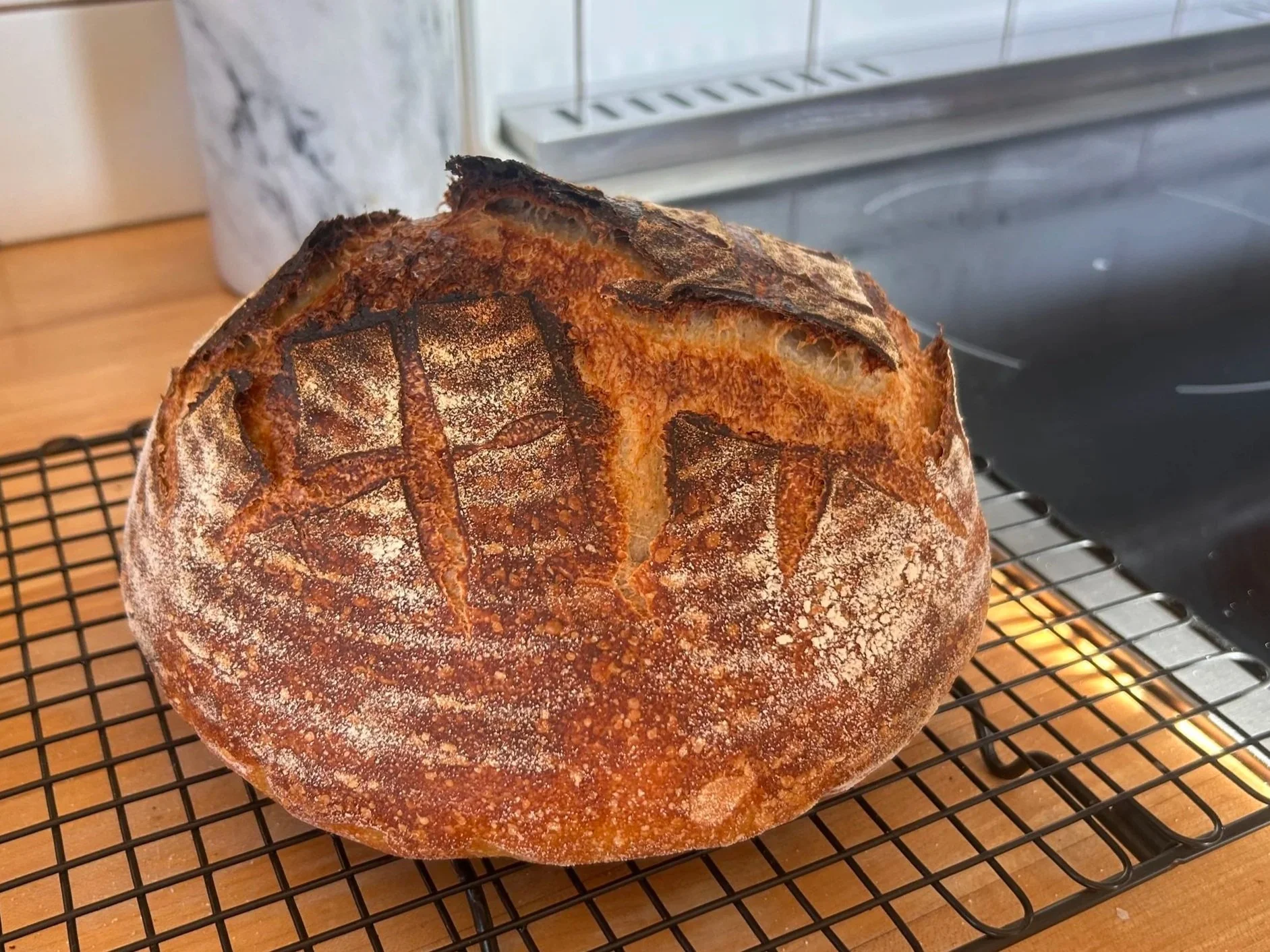
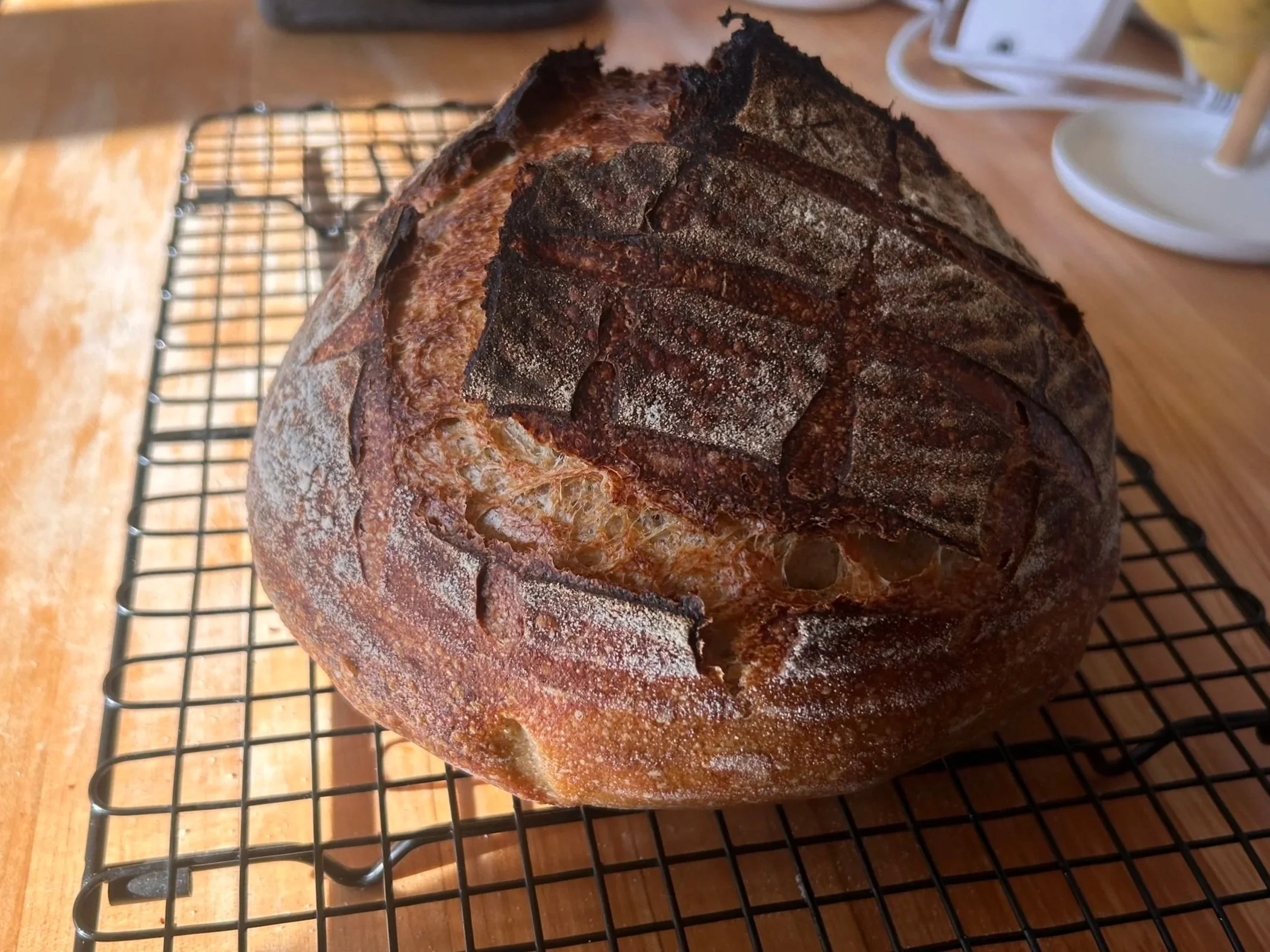
French Sourdough Boule
French Sourdough Boule
by Roaring Fork Mill
Ingredients (yields 2 loaves)
Levain (181 grams):
36 grams ripe sourdough starter
73 grams Roaring Fork Mill Heritage Bread flour
73 grams water
Autolyse:
700 grams Roaring Fork Mill Heritage Bread flour
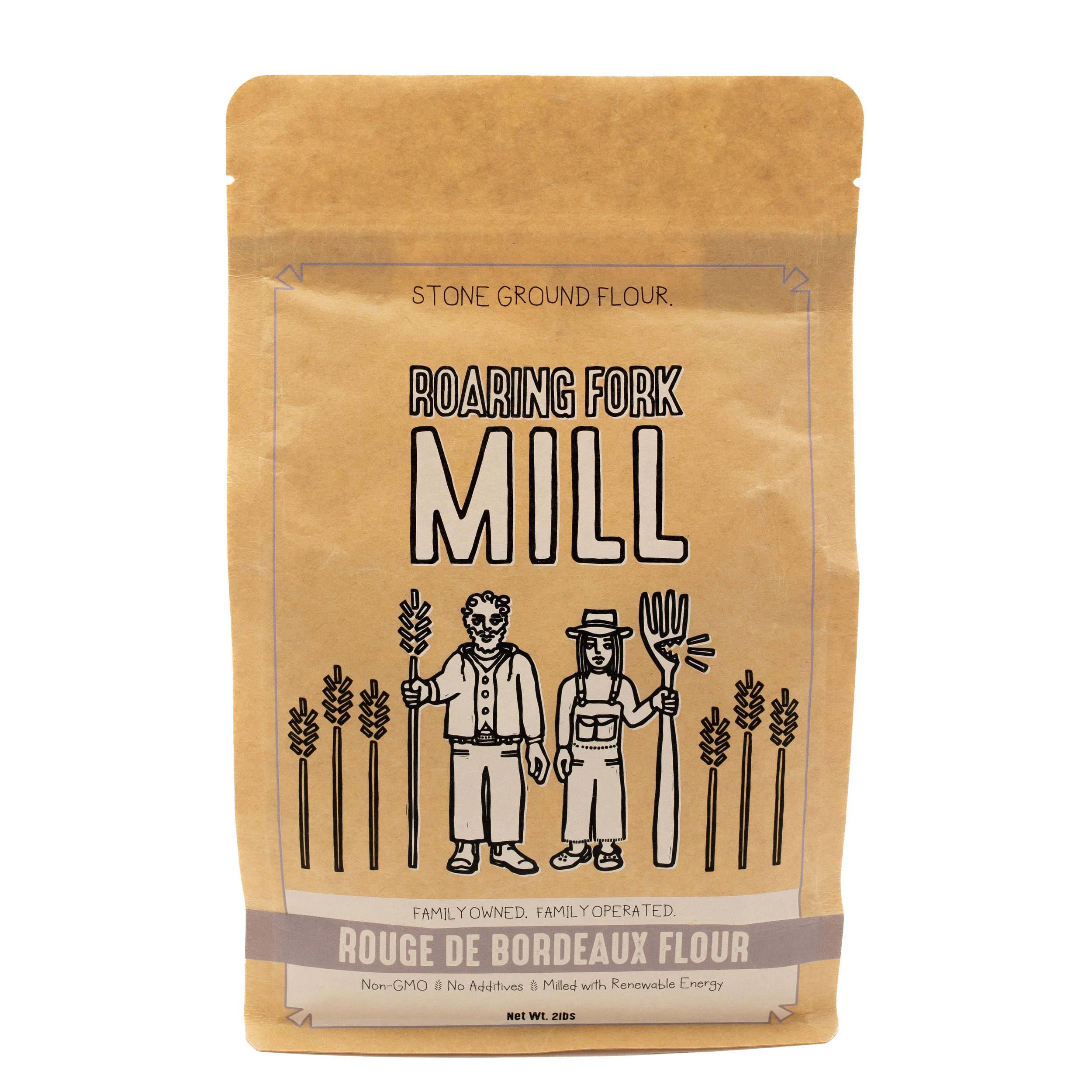
225 grams Roaring Fork Mill Rouge de Bordeaux flour (Type-85)
1 gram of malt powder (optional)
625 grams lukewarm (78°F) water
18 grams salt
50 grams water
Steps:
Levain: To make the levain, mix ingredients in a jar and leave covered at a warm temperature (74-76°F) to ripen for 5 hours.
Autolyse: 1-2 hours before your levain is done ripening, combine ingredients in a large bowl. Use wet hands to mix until no dry bits remain and the dough is shaggy and loose. Scrape down the sides of the bowl. Cover the bowl and place it near your levain.
Tip: Experiment with different flours to see how they impact flavor, color, and texture. A good rule of thumb is to ensure at least 70% of your total flour is true (sifted) bread flour. Our go-to is Rouge de Bordeaux, but Spelt and/or Purple Barley are also great options.
Once your levain is ripe, add it along with 18 grams of fine baking salt to the top of the dough that was just in autolyse. Use a splash of water to moisten. With wet hands, mix thoroughly.
Add the remaining water (up to 50 grams) if the dough feels like it can handle it.
Next, knead the dough for 5-6 minutes in the bowl, until it smooths and becomes elastic.
Transfer the dough to a container and cover. Place dough in a warm place (74-76°F) for bulk fermentation.
Bulk Fermentation: After 30 minutes of bulk fermentation, wet your hands, and perform the first set of stretches and folds.
Tip: Perform stretches and folds by grabbing and lifting one side of the dough up and over to the other side. Rotate the bowl 180 degrees and repeat. Then rotate the bowl a quarter turn and stretch and fold that side. Rotate the bowl 180 degrees again and finish with a stretch and fold on the last side. The dough should be neatly folded up in the bowl.
Cover and repeat these folds once more after 30 more minutes. Let the dough rest, covered, for the remainder of bulk fermentation (about 2 hours).
Tip: After 3 hours, the dough should be well-risen and puffy to the touch. The edge where the dough meets the container should be domed downward, showing strength and rise.
Pre-shape: Scrape the dough onto a clean counter. Using your bench knife, divide the dough into 2 equal pieces and, with wet hands, pre-shape into loose rounds. Let the dough rest on your counter, uncovered, for 30-35 minutes.
Shape: Dust the top of the pre-shaped rounds and your work surface with white rice flour. Using your bench knife, flip one of the rounds over onto the floured area. Shape the dough into a circle or oval (bâtard). Repeat with the remaining round.
Proof: Gently transfer the dough to 10-inch circular proofing baskets, or 14-inch-long oval proofing baskets, seam-sides up. Dough should have a final temperature of 78°F. Cover the baskets with plastic and proof overnight in the refrigerator.
Bake:
In the morning, place a Dutch oven on an oven rack in the bottom-third of your oven. Preheat your oven to 450°F.
When the oven is preheated, take one of the proofing baskets out of the fridge. Flip the dough onto a piece of parchment paper, seam side down. Score the dough, then transfer to the preheated Dutch oven.
Place in the oven, cover with the lid, and bake for 20 minutes. Then, remove the lid and bake uncovered for another 30 minutes.
Tip: When done, the loaf should have an internal temperature of around 204°F (95°C), and the crust should be deeply colored. Let the loaves cool on a wire rack for at least 1 hour before slicing.
Repeat for the second loaf.
Recipe adapted from The Perfect Loaf blog.
SHOP THIS RECIPE